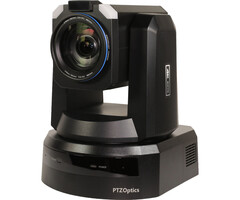



PTZOptics Rise 4K - 20x Zoom



Trigitec B.V., Tokyostraat 19D, 1175 RB Lijnden
Features
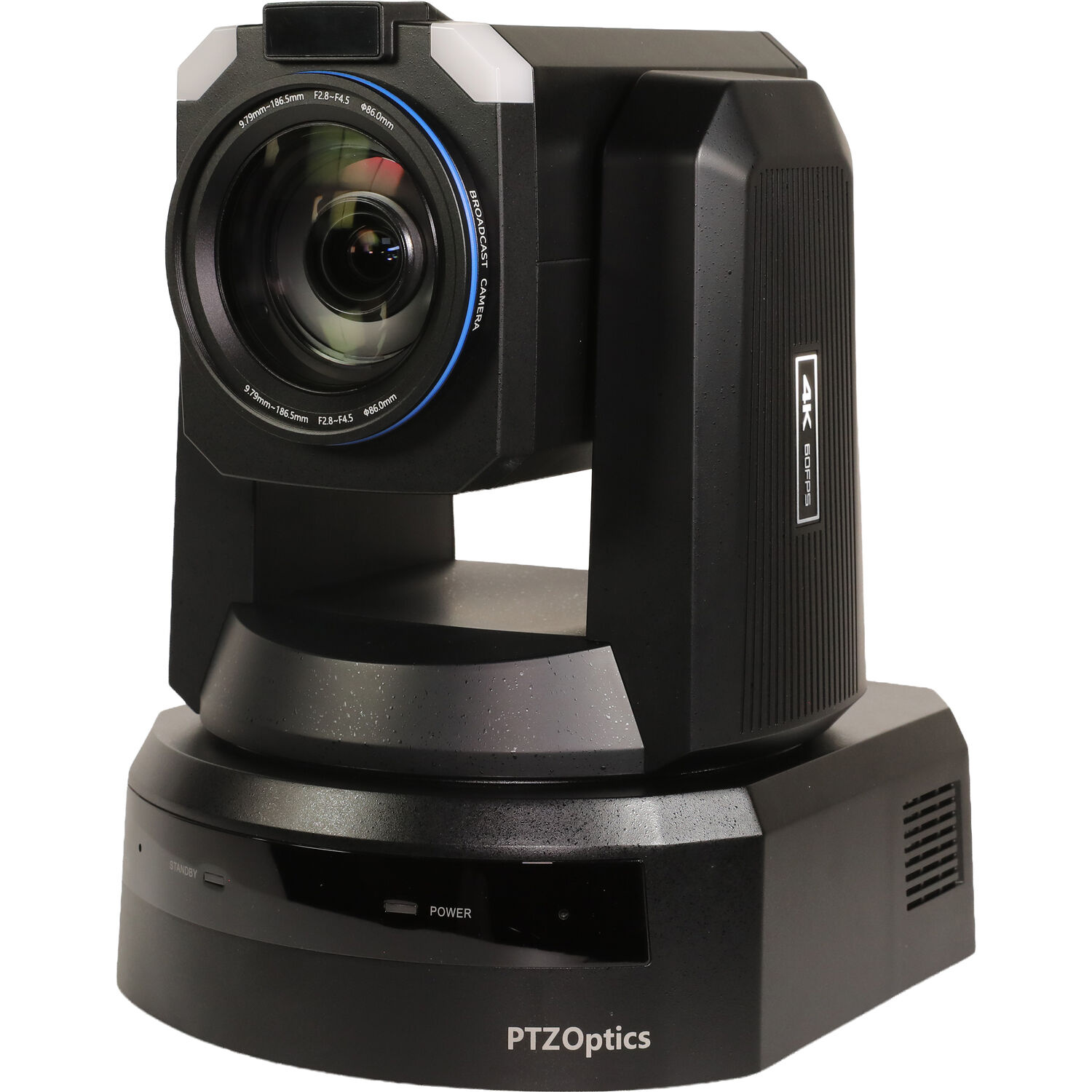
The PTZOptics Rise 4K is a professional broadcast PTZ camera that combines 4K60 image capture with a large 1-inch Sony CMOS sensor , 20x optical zoom, optical image stabilization, and intelligent auto-tracking. The camera was developed for high-quality multi-camera productions where image quality, professional synchronization, and connectivity are all important.
The Rise 4K uses a 50-megapixel CMOS sensor and can produce video up to UHD 4K 3840 × 2160 at 60 frames per second . The relatively large 1-inch sensor distinguishes the camera from many conventional PTZ cameras with smaller sensors and is intended for productions where there is more emphasis on image quality, detail, and a more cinematic look.
The integrated lens offers 20x optical zoom and a horizontal field of view of up to approximately 70°. In combination with phase-detection autofocus (PDAF) and optical image stabilization, the camera can capture both wide-angle shots and close-ups from a greater distance.
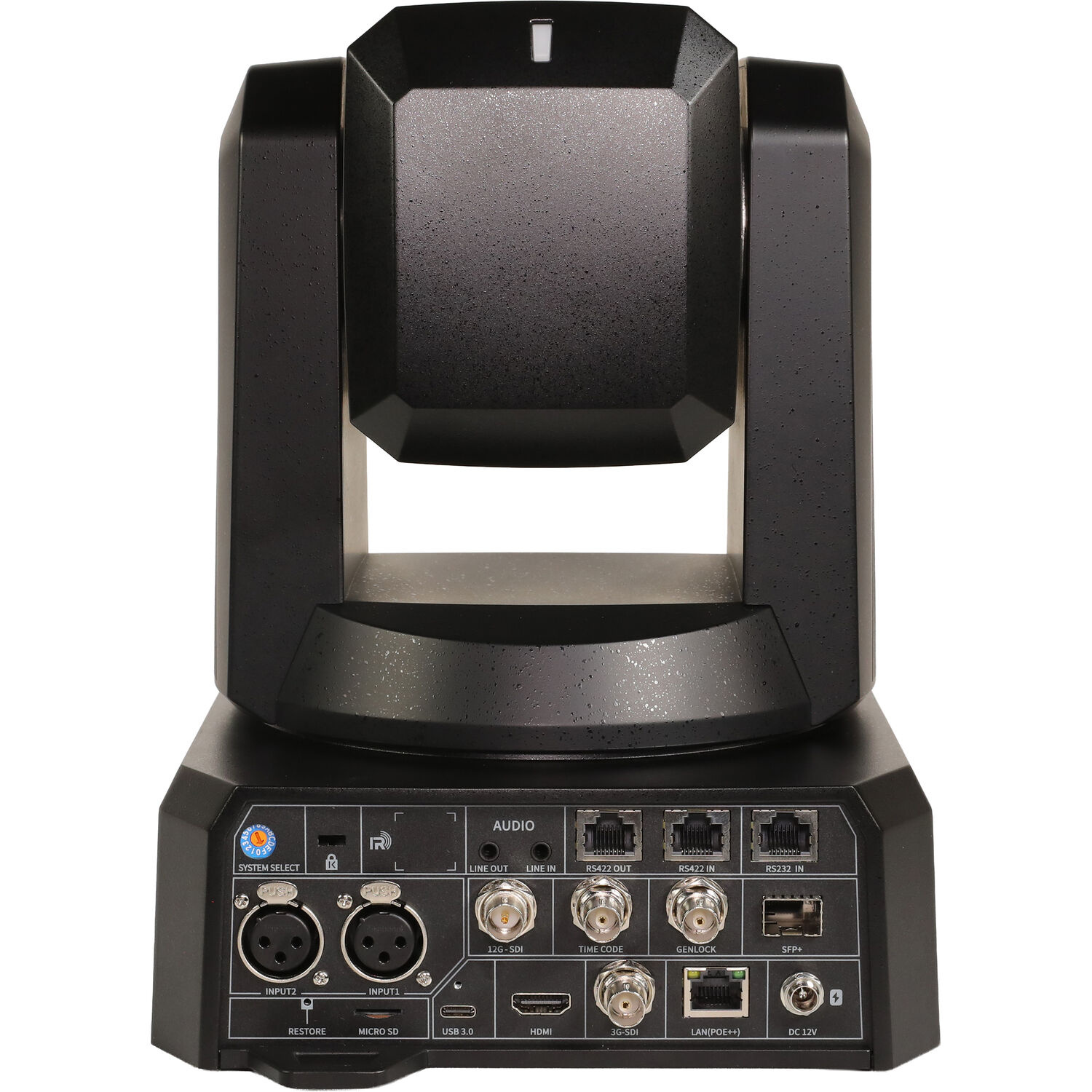
For integration into professional broadcast environments, the Rise 4K features, among other things , 12G-SDI, 3G-SDI, HDMI, NDI HX3, SFP+, genlock, timecode, and professional XLR audio . This allows the same camera to be deployed within traditional SDI productions, IP workflows, and fiber optic infrastructures.
In addition, the camera comes with Horizon , PTZOptics' browser-based camera system for control, image settings, presets, tracking, and automation.
Key features
- Professional 4K broadcast PTZ camera
- 1-inch Sony CMOS sensor
- 50 megapixel sensor
- UHD 4K up to 60 fps
- 20x optical zoom
- Horizontal viewing angle up to approximately 70°
- Phase Detection Autofocus (PDAF)
- Optical image stabilization
- Intelligent auto-tracking
- Support for FreeD camera tracking
- 12G-SDI output for 4K60
- Additional 3G-SDI output for HD workflows
- HDMI 2.0 output
- NDI HX3 over Ethernet
- RTMP, RTMPS and RTSP streaming
- SFP+ for professional fiber optic workflows
- Genlock for camera synchronization
- Timecode connection
- 2× 3-pin XLR Mic/Line input
- 48V phantom power
- PoE++ support
- Local recording to memory card
- Front and rear tally
- Horizon browser-based operation
- Presets and automation
- Remote PTZ control
Operation
The PTZOptics Rise 4K combines the remote-controlled pan, tilt, and zoom functionality of a traditional PTZ camera with features normally found primarily in professional broadcast cameras.
This allows the camera to be operated centrally from a control room and simultaneously integrated into a synchronized multi-camera environment with genlock, timecode, SDI, and professional audio.
1-inch 4K sensor
Central to the Rise 4K is a 1-inch Sony CMOS sensor with 50 megapixels. The camera delivers up to 3840 × 2160 UHD video at 60 fps .
The larger sensor is particularly relevant for productions where higher image quality is required than with conventional PTZ cameras with smaller 1/2.8-inch or comparable sensors. Furthermore, a larger sensor can offer more possibilities for creating a less pronounced 'video camera look', depending on focal length, distance to the subject, and the chosen shooting settings.
20x optical zoom
The integrated zoom lens has a 20x optical zoom range . This allows a single camera to produce both overview shots and close-ups without the need for digital magnification.
On the wide-angle side, the horizontal angle of view is approximately 70° . This makes the camera suitable for studios and other spaces where both a relatively wide overall view and a strong telephoto position are required.
The 20x optical zoom is practical, for example, on stages, in auditoriums, for sports productions, presentations, and in larger studios where the camera cannot be placed directly next to the subject.
Phase-Detection Autofocus
For focusing, the Rise 4K uses Phase-Detection Autofocus (PDAF) . This system is designed to focus quickly and accurately on the subject, even when the camera or the subject is moving.
This is particularly important for PTZ productions where there is frequent switching between presets, different zoom positions, and moving presenters.
Optical image stabilization
The Rise 4K features optical image stabilization . This helps correct minor vibrations before the image is digitally processed.
Image stabilization can be particularly important at longer zoom settings. After all, at 20x zoom, small vibrations from a mounting structure become much more visible than in a wide-angle shot.
Intelligent auto-tracking
The built-in auto-tracking can automatically follow a person as they move through the frame. The camera can be aimed at a selected person, even when multiple people are present in the frame.
For productions with multiple presenters, the operator can switch between people without performing every camera movement fully manually.
This reduces the amount of continuous PTZ operation required during a production and can enable a single operator to manage multiple cameras.
Horizon Web
Horizon is the browser-based control environment that comes standard with the Rise 4K. Camera movements, image settings, tracking, and automation can be centrally managed via this interface.
Horizon offers possibilities for, among other things:
- Pan, tilt, and zoom controls
- Camera and color settings
- Intelligent presets
- Auto-tracking
- Auto-framing
- Automation
- Monitoring and camera management
Furthermore, for evaluating and matching cameras, the Horizon platform offers professional tools such as waveform, vectorscope, and RGB parade.
12G-SDI and 3G-SDI
For traditional broadcast infrastructures, the Rise 4K features both 12G-SDI and 3G-SDI .
Via 12G-SDI, UHD 4K can be transmitted at up to 60 fps over a single BNC cable. This makes the camera suitable for 4K control rooms and other professional installations where a robust baseband video connection is desired.
The separate 3G-SDI connection can be used within existing HD production environments.
NDI HX3 and IP video
In addition to SDI and HDMI, the Rise 4K supports NDI HX3 via the network connection. This allows video, audio, and camera control to become part of an IP-based production environment.
The NDI HX3 uses video compression to transport high-quality video with significantly less network bandwidth than uncompressed baseband video. This makes the camera suitable for productions where multiple video signals need to be distributed over a standard IP infrastructure.
In addition to NDI, the camera supports IP streaming protocols such as RTMP, RTMPS, and RTSP .
SFP+ fiber optic
An important difference compared to many standard PTZ cameras is the presence of an SFP+ slot . With a suitable SFP+ module, the camera can be integrated into professional fiber optic and long-distance infrastructures.
This can be particularly interesting in larger broadcast facilities, stadiums, event venues, theaters, and other installations where the distance between camera and control room is greater than is practical with conventional copper cabling.
Gen lock and time code
The Rise 4K features connections for genlock and timecode . These features are particularly relevant for professional multi-camera productions.
Genlock makes it possible to synchronize multiple cameras and video systems on the same reference. This allows cameras to be used accurately within the same production infrastructure.
In addition, Timecode provides a common time reference for recordings and other production equipment, which can be important for recording, editing, and synchronization in more complex workflows.
Professional XLR audio
For audio, the camera features two 3-pin XLR Mic/Line inputs with support for 48V phantom power .
This allows professional microphones, wireless receivers, audio mixers, or other balanced audio sources to be connected directly to the camera.
Audio can then be embedded together with the video signal in SDI, HDMI, IP/NDI, fiber, and USB workflows, among others.
FreeD for virtual production
The Rise 4K supports the FreeD protocol for camera tracking. This allows data regarding pan, tilt, zoom, focus, and iris, among others, to be transmitted to compatible systems.
This tracking data can be used for augmented reality, virtual sets, graphics, and other virtual production applications where the position and lens settings of the real camera must be known.
Flexible operation
The camera can be controlled in various ways. In addition to Horizon, the Rise 4K can be integrated with production and streaming software and with separate PTZ controllers.
This allows the camera to become part of workflows with, for example, OBS, vMix, Wirecast, mimoLive, TriCaster, and other compatible production systems.
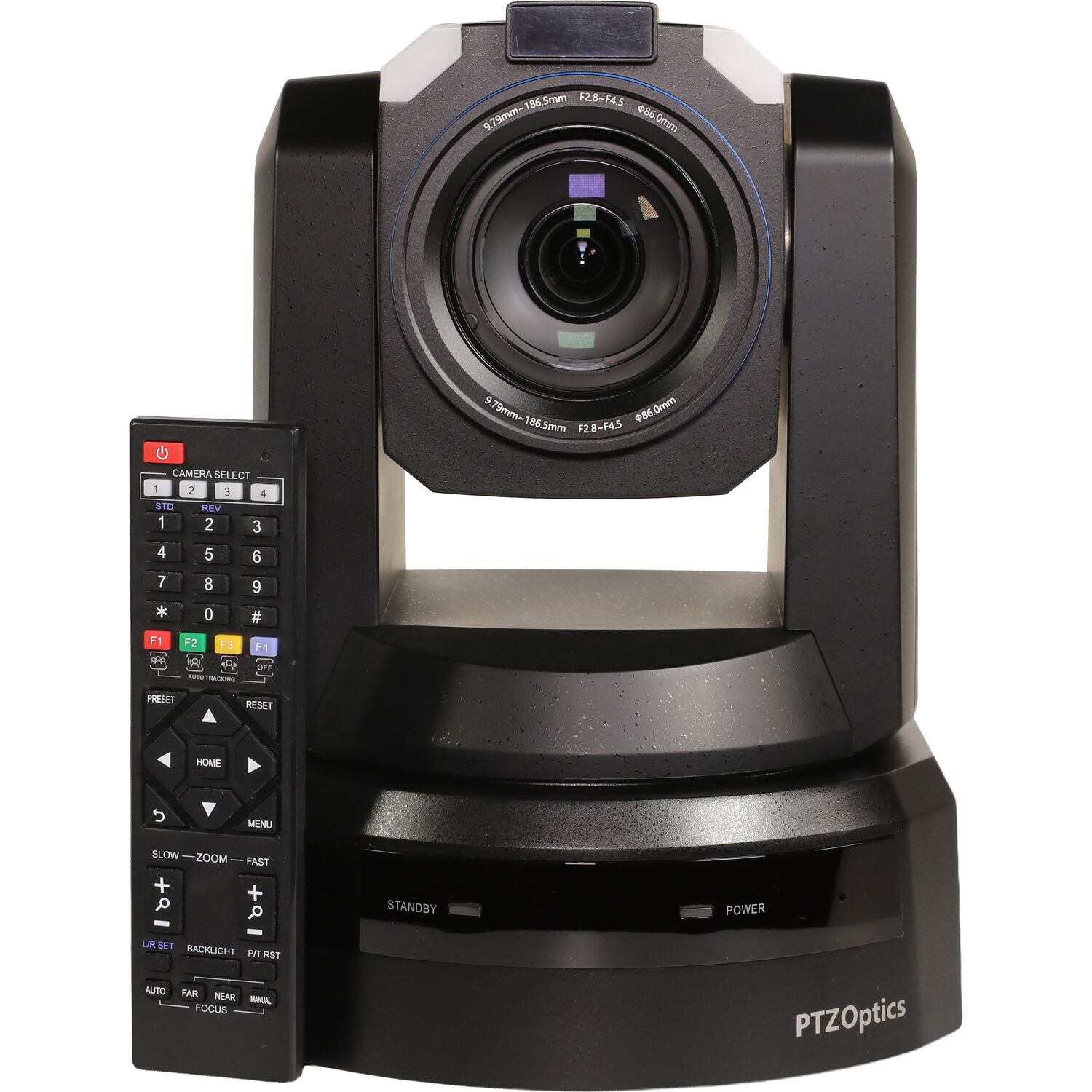
For physical control, compatible PTZOptics controllers can be used, including IP and serial joysticks and the SuperJoy controller.
PoE++
The network connection supports PoE++ according to IEEE 802.3bt . This allows the camera to be powered via a suitable PoE++ network infrastructure.
This can simplify installation because a separate power connection is not required at every camera position.
Application
The PTZOptics Rise 4K is primarily intended for professional productions where the flexibility of a PTZ camera must be combined with broadcast connectivity, 4K image quality, and precise synchronization.
Suitable applications include:
- Broadcast studios
- Television productions
- Live multi-camera productions
- Sports productions
- Live events
- Theaters and stages
- Concert recordings
- Corporate studios
- Universities and educational studios
- Houses of worship
- Auditoriums
- Streaming studios
- Virtual production
- Augmented reality productions
- Remote production
In particular, the combination of 12G-SDI, genlock, timecode, SFP+, XLR audio, and FreeD makes the Rise 4K more interesting for broadcast environments than PTZ cameras designed primarily for videoconferencing, education, or simple livestreaming.
Limits
The Rise 4K offers significantly more professional connectivity options than a conventional PTZ camera, but there are some important features to consider when assembling a system.
- NDI HX3 is a compressed IP video technology. It should not be confused with uncompressed 12G-SDI or NDI High Bandwidth.
- For maximum UHD 4K60 quality via a traditional broadcast connection, the 12G-SDI output is the relevant connection. The separate 3G-SDI connection is for HD signals.
- According to the specified specifications, the USB video output is limited to a maximum of 1080p60 and is therefore not the designated connection for 4K60 production.
- To use the SFP+ connection, a suitable SFP+ module and compatible fiber infrastructure are required. The presence of the slot does not mean that every fiber optic connection can be connected without additional hardware.
- PoE++ requires a switch or injector capable of supplying sufficient power according to IEEE 802.3bt . A standard PoE or PoE+ port is not automatically sufficient.
- Auto-tracking reduces the need for continuous manual camera control, but does not replace a camera operator in every production. Complex stage movements, multiple people, and creative camera work may still require manual direction.
- FreeD provides camera tracking data for compatible systems, but does not constitute a complete virtual production environment in itself. Additional graphics, rendering, or compositing software remains necessary.
- The camera does not have built-in Wi-Fi; network video and network control are via a wired connection.
- No built-in microphone is specified. An external audio source must be connected for audio recording.
- The camera has an integrated 20x zoom lens. Therefore, lenses cannot be changed as with a mirrorless or studio camera.
PTZOptics Rise 4K Camera
12V Power Supply
Remote control
- Type: professional PTZ broadcast camera
- Sensor: 1-inch Sony CMOS
- Sensor resolution: 50 megapixels
- Maximum video resolution: 3840 × 2160 UHD
- Maximum framerate: 60 fps
- Autofocus: Phase-Detection Autofocus (PDAF)
- Manual focus: yes
- Image stabilization: optical
- White Balance: Auto, Indoor, Manual, One Push, Outdoor and VAR
- Optical zoom: 20x
- Maximum horizontal viewing angle: approximately 70°
- Integrated zoom lens
- Pan range: -170° to +170°
- Total pan movement: 340°
- Pan speed: approx. 0.7-100°/s according to supplied specification
- Tilt range: -30° to +90°
- Total tilt range: 120°
- Tilt speed: approximately 1.7-100°/s according to supplied specification
- Intelligent auto-tracking
- Preset support
- FreeD camera tracking
- 1× 12G-SDI BNC
- 1× 3G-SDI BNC
- 1× HDMI 2.0
- 1× RJ45 Ethernet for IP/NDI
- 1× USB 3.x video interface
- 1× SFP+ slot
- UHD 4K 3840 × 2160 up to 60 fps via supported 4K outputs
- Full HD 1920 × 1080 up to 60 fps
- 1080i 50/59.94/60 via supported outputs
- 720p 59.94/60 via supported outputs
- USB video up to a maximum of 1080p60 according to the supplied specification
- NDI HX3
- RTMP
- RTMPS
- RTSP
- UHD IP video up to 3840 × 2160
- Wired Ethernet connection
- No built-in Wi-Fi
- 1× BNC timecode
- 1× BNC genlock
- Suitable for synchronized multi-camera workflows
- 2× 3-pin XLR Mic/Line input
- 48V phantom power
- AAC audio for supported IP workflows
- Embedded audio via supported video connections
- No built-in microphone
- No built-in speaker
- Onboard recording to memory card
- Memory card slot available
- Front and rear tally
- PTZOptics Horizon browser interface
- Pan, tilt and zoom
- Auto-tracking
- Auto-framing
- Intelligent presets
- Image and color settings
- Automation
- Waveform
- Vectorscope
- RGB parade
- Support for compatible hardware PTZ controllers
- Integration with compatible production and streaming software
- Ethernet: RJ45
- PoE++: IEEE 802.3bt
- External DC power supply supported
- SFP+ expansion slot for compatible fiber solutions